
Diet is a well-known risk factor for developing diseases such as diabetes. Healthy diets that align with national dietary guidelines are known to reduce the risk of chronic disease and increase life span.
An essential task of nutrition and health research is to measure and assess dietary intake and identify the relationship between food and drink groups and the risks of diet-related chronic diseases.
The Challenge
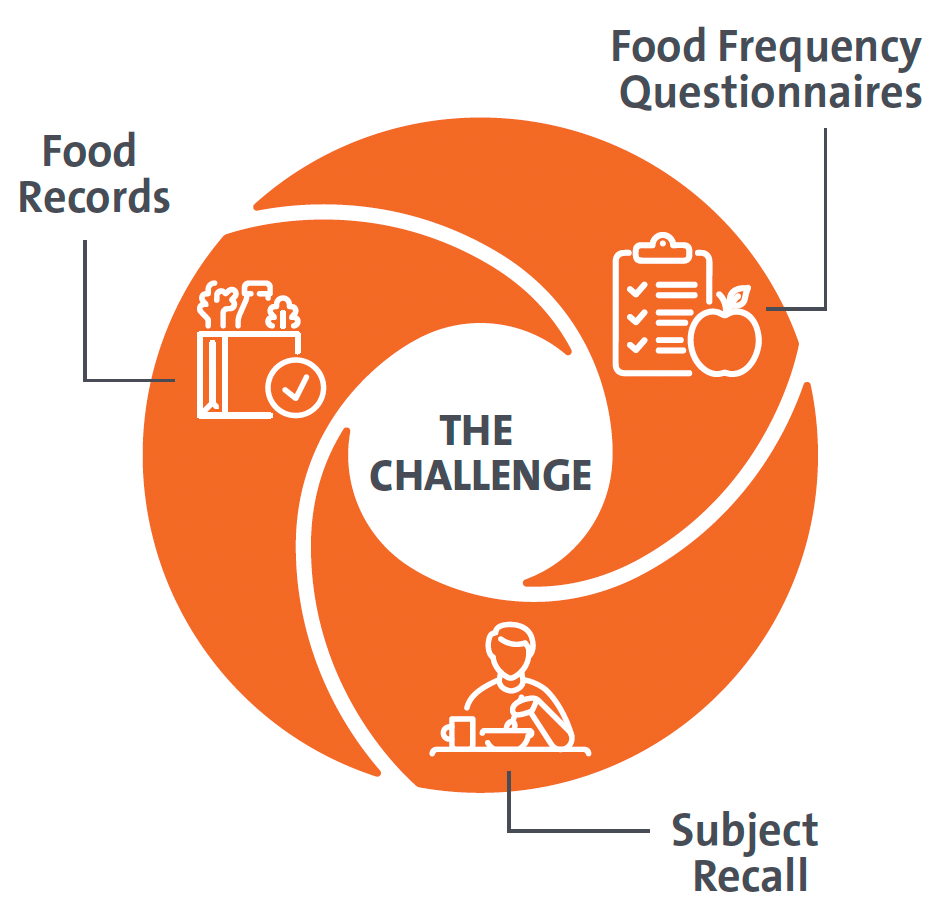
Dietary intake is commonly measured with methods such as those listed to the left.
These methods rely on the accuracy of food databases and objectivity of participants’ self- reporting. Food databases are often inaccurate, and participants may misreport their diet. These traditional methods for evaluating dietary habits contribute to inaccuracies in research findings.
A New Approach
Metabolomics, the large-scale study of small molecules in organisms, is being applied to nutritional research examining the link between metabolism and diet.
The use of dietary biomarkers, such as vitamin C levels, allows for objective verification of participants’ self-reported diets. Coupled with technologies like genomics and statistical tools, there is great potential in dietary biomarker research. The DBDC is working to identify biomarkers that can be objective indicators of dietary habits and can be used in nutritional intervention studies. The DBDC will use these findings to provide continually evolving evidence for addressing health issues related to diet.

DBDC's Studies
The DBDC is a consortium of several research studies at sites across the United States. Each study has a different focus.
- UC Davis Dietary Biomarkers Development Center focuses on biomarkers linked to the consumption of fruits and vegetables.
- Dietary Biomarkers Intervention Core focuses on biomarkers linked to the consumption of proteins, carbohydrates, and dairy.
- Phase 1 Seattle Dietary Biomarkers Development Center focuses on advancing the science of measuring dietary intake and validation of biomarkers.